
The QA Edge
Insights, Strategies & Tools for Smarter QA

Beyond Go-Live: Measuring What Quality Really Delivers After Release
Post-release quality metrics, such as defect escape rate, change failure rate and customer-reported defects, show how software holds up in production. Tracking them and tracing every escaped defect back to its requirement and test, is how QA teams prove their value...

QAConnector Migration Playbook: 9 Steps to Switch Test Management Tools Without Disrupting Releases
A test management migration does not have to mean a lost quarter. The safest way to switch is in three phases: prepare (scope, clean up, map), move (requirements first, then tests, then integrations) and cut over (pilot, parallel run, retire). This nine-step playbook...
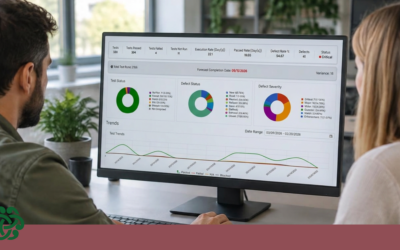
QA Maturity Metrics: The Six That Matter and How to Track Them in One Platform
QA maturity metrics show whether quality is consistent, visible, and trustworthy, not just whether tests are passed. Six matter most: requirements traceability, coverage, pass rate trend, defect closure rate, defect escape rate, and execution progress. Tracked in one...

Release Readiness Reporting: Prove Every Quality Gate Passed
Release readiness reporting is the practice of showing, with traceable evidence, that every quality gate passed before a build ships. A strong report connects requirements, test cases, results, and open defects in one view, so QA teams can answer "are we ready?" in...

QA Leadership Metrics: Prove Your Impact With Real-Time Reporting
QA leadership metrics are the outcome-level measures, such as defect escape rate, requirement coverage, and release readiness, that show executives how QA reduces business risk. QA leaders who report them in real time, instead of in monthly spreadsheets, make their...

What Test Coverage Really Means (and How to Measure It)
Test coverage measures how much of what matters in your software has been tested: requirements, high-risk workflows, positive and negative scenarios, automation, and actual execution. It's not a single percentage. Measured properly, it tells QA teams where the gaps...

TestGen AI: Generate Faster Without Losing the Human Checkpoint
TestGen AI generates positive and negative test cases from a requirement document in minutes, but speed isn't the whole story. The platform builds a human checkpoint and a full audit trail into that same workflow, so QA teams move faster without losing the ability to...

Audit Day Shouldn’t Be a Fire Drill: How to Keep QA Documentation Always Ready
Audit-ready QA documentation isn't something you build the week before an audit. It already exists, because every test case, result, and defect got logged the moment it happened. Teams that treat documentation as part of testing, instead of a separate scramble, spend...
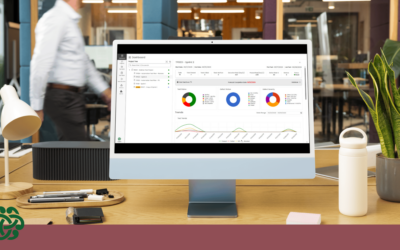
What Test Coverage Really Means (and How to Measure It)
Test coverage measures how much of your application your tests exercise, but the percentage alone does not indicate quality. Meaningful test coverage maps tests to requirements and risk, not just lines of code, so a high number only matters when it covers the paths...